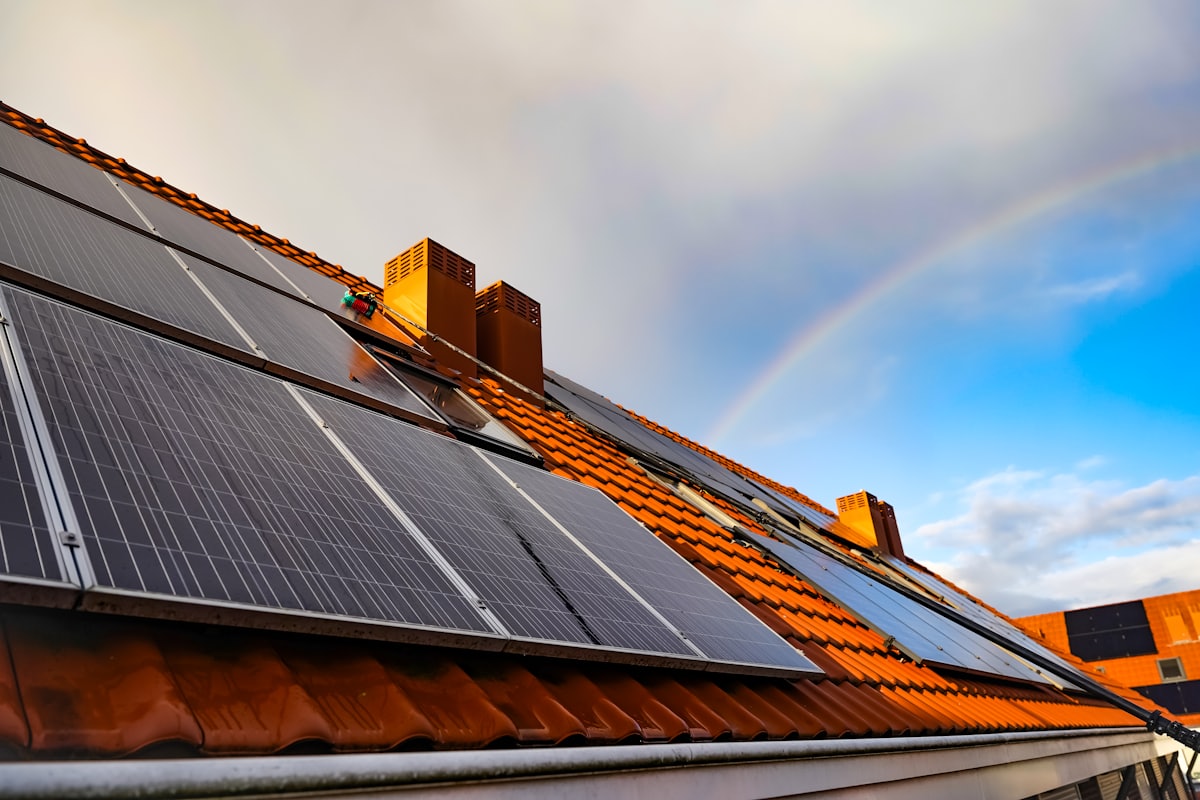
Solar panels on a Mediterranean tiled roof under a blue sky

Mallorca · technical PV cleaning

Solar panel cleaning in Mallorca

Your panels get dirty on their own: dust, sea salt and calima.

Whatever settles on the glass intercepts part of the radiation before it reaches the cells: less radiation captured, fewer kWh generated. And on Mallorca it builds up fast — months without meaningful rain, salt-laden sea breeze, and Saharan dust episodes.

We clean to the procedure the module manufacturers themselves set out: low-hardness water, no abrasive products, and nobody stands on your panels.

What dirt actually does to your system

A PV module turns the radiation passing through its glass into electricity. Anything sitting on top intercepts that radiation before it reaches the cell. But not all soiling does the same damage, nor in the same way.

Two different ways of losing output

1. Transmittance loss. A thin, even layer — calima, dust, salt — lets less radiation through to the module as a whole. The loss is proportional to the soiling: light film, small loss. The catch is that it is constant, every sunny day, and it accumulates through the dry months without ever announcing itself.

2. Concentrated partial shading. This is where the damage stops being proportional. The cells in a module are wired in series, so the same current has to flow through every one of them. If a bird dropping or a leaf covers one cell, it can no longer supply that current and instead limits the current of its whole string; the current the other cells keep generating forces it into reverse bias, at which point the cell stops producing and starts dissipating energy as heat. That is a hot spot, and sustained over time it can brown the glass and degrade the encapsulant.

To prevent that, modules carry bypass diodes that short out the affected string. They do their job — they protect the panel — but bypassing a string means you stop producing with all of it. Which is why a mark the size of a coin can cost you far more than the area it covers.

How much is actually lost? It depends heavily on the location. According to a guide on solar production losses, in regions with rain all year round soiling losses run at about 2 %, while in areas with a long dry season they can reach 5 %; frequent dust adds another 1–2 %, and being close to heavy traffic a further 1 %.

Source: pv magazine — “Guía para entender las pérdidas en la producción solar” (2023, in Spanish), citing NREL performance parameters.

Worth saying plainly: those figures come from general studies, not from a measurement of your roof. Every installation loses what it loses depending on orientation, tilt and surroundings. We are not going to quote you an invented percentage — we assess it on site, with your system in front of us.
How it works

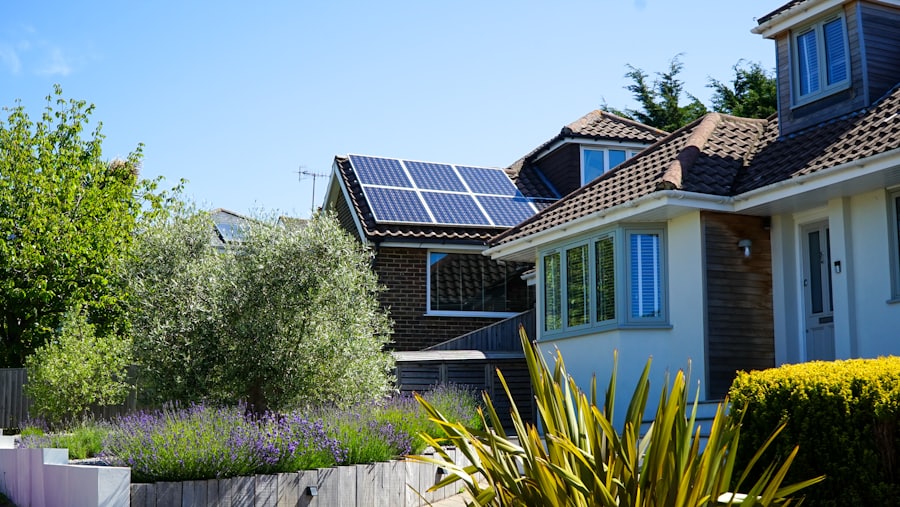
Detached house with solar panels on the roof
Stock photograph, for illustration.
  1. You message us

    A WhatsApp with your area and, if you know them, how many panels you have and what the roof is like: flat or pitched, and how high. That's enough for us to give you a sense of it. No forms, no personal details, no payment up front.

  2. We schedule a run to your area

    We group the systems in the same area into the same day. Travel, treated water and setting up the equipment cost the same for one house as for several, so grouping brings the price per system down.

  3. We clean, with the price agreed beforehand

    We look at the panels and how they're reached, and give you the price before touching anything. Afterwards we check the glass, frames and mountings and tell you if we've seen anything worth looking at.

How to clean a panel without ruining it

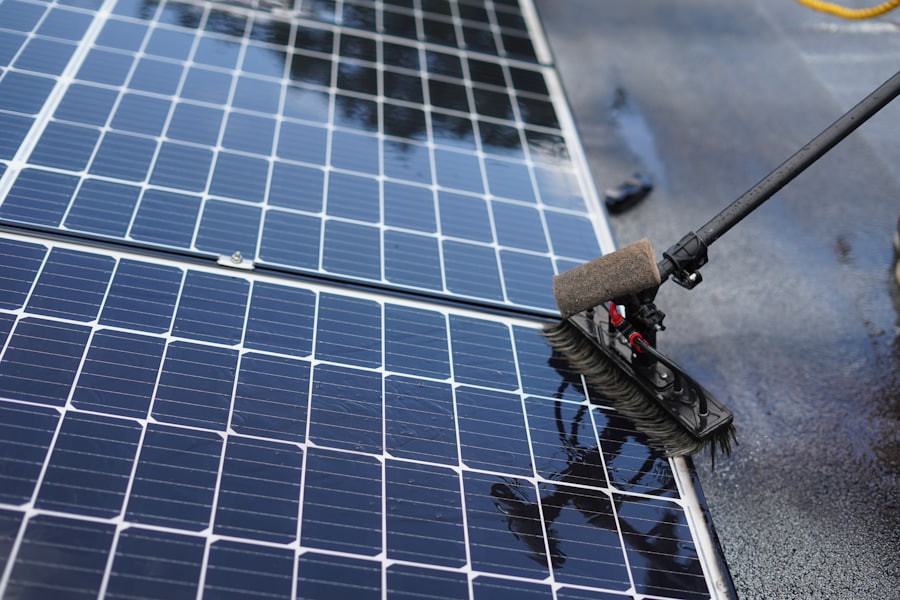
Cleaning a solar panel with a long-handled brush
Stock photograph, for illustration.

Module glass is not ordinary glass: it carries an anti-reflective coating on the outer face. Scratching it or attacking it with the wrong product is permanent damage, and cleaning harder won't undo it. That is why manufacturers publish fairly strict cleaning instructions. They are the ones we follow.

The specific limits — total hardness < 75 mg/L, a maximum 20 °C temperature difference, maximum 35 bar at the nozzle, and the ban on abrasives, hydrochloric acid, ammonia and caustic soda — are taken from First Solar's module cleaning guidelines (PD-5-804 rev. 3.4). Every manufacturer has its own, and it's worth checking the ones for your specific module.

Quick questions

How often do they need cleaning?

It depends on the surroundings, and quite a lot. Front-line coastal, a dirt track alongside, pines dropping resin or an area with plenty of pigeons will soil far faster than a clear roof inland.

As a general reference, once or twice a year. On Mallorca the natural window is the end of summer: months without useful rain have stacked up and the calima has been laying down dust right through the season of highest radiation.

What does it cost?

It depends on how many panels you have and how they're reached: a flat, accessible roof is not the same as a pitched or high one, or panels split across several faces.

That's why there's no price list on this page. We give you a firm quote, with no obligation, once we've seen it.

When can you come?

We organise visits by area so you're not carrying the travel cost on your own, so the date depends on when we next have a day in yours. Message us with where you are and we'll tell you how it stands.

Does messaging commit me to anything?

No. Messaging is asking for information and a quote, nothing more. No personal details, no forms, no payment up front, and you can turn the quote down without explaining yourself.

Can't I just do it myself with a hose?

You can, and if it's only loose dust that's sometimes enough. But there are three things worth knowing.

The water. Mains water in the Balearics is among the hardest in Spain, well above the 75 mg/L limit manufacturers ask for. Drying in the sun it leaves limescale on the glass, and you end up with a layer costing you output just like the dirt you set out to remove.

The timing. On a hot panel the water evaporates before it lifts anything, and sets the marks instead.

The roof. Getting up there carries its own risk, and stepping on one module to reach the next does damage you won't see until it shows in your production.

Shall we talk about your system?

Tell us your area and what the roof is like. We'll explain what cleaning it involves and what it costs, with no obligation.

Get a quote on WhatsApp